Senior Care Risk: Relationships Between Staff and Residents/Families
Susan Lucot, MSN, RN, MLT (ASCP), CPHRM
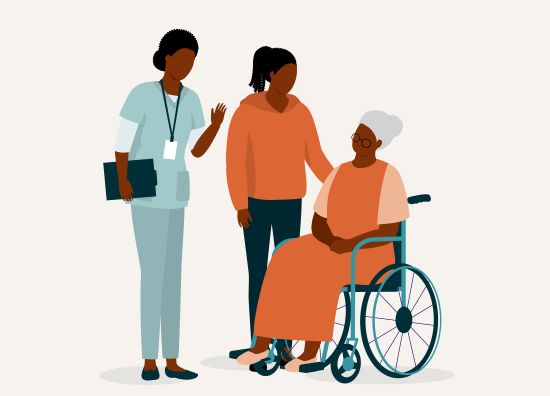
Most organizational leaders in senior care settings want residents to consider the facility or center as their home. However, a fine line exists between creating a comfortable environment and upholding responsibility for keeping residents safe and providing appropriate care.
Consider this: If a resident lived in their own home (e.g., an apartment, house, etc.) and they experienced a fall, developed a pressure injury, eloped and were injured, had an altercation with someone else, or choked or had a bad reaction to food, they would not sue themselves. However, if these situations occur in a senior living environment, they might sue the organization.
Thus, it’s imperative that senior care staff develop relationships with residents/families that reinforce trust and professionalism. Failure to do so may lead to complaints, legal action, reputational harm, and more. One top area of risk is privacy and confidentiality. If, for example, a staff member encounters a resident’s family member in the community and provides updates or information about that resident, they may be in violation of HIPAA.
Although it might seem silly not to answer a very general question about how the resident is doing or whether they had a good day, doing so presents privacy concerns. Further, what if the resident had an adverse event or mishap? If the staff member proceeds to discuss the event, they could inappropriately disclose protected information as well as sow suspicion in the family member’s mind as to what truly happened to their loved one.
To manage these seemingly harmless but very risky situations, senior care organizations can implement the following strategies:
- Provide all staff members (and volunteers) with comprehensive training regarding the organization’s privacy and confidentiality policies. Make sure to review and reinforce everyone’s obligations under HIPAA and state privacy laws.
- As part of training, discuss potential consequences for violating resident privacy and confidentiality, including disciplinary actions, state board investigations and sanctions, and civil and criminal penalties.
- Advise staff members about how to respond if they encounter inquiring family members (or acquaintances) outside of the organization. For example, give them a simple script such as, “Unfortunately, I cannot answer your question because of my obligations to maintain privacy. If you want to know how your loved one is doing, please call the center for more information.”
- Develop comprehensive policies and guidance related to social media, and educate staff about the potential risks of using social media, including how plaintiff attorneys might use their personal social posts against them or the organization in a malpractice lawsuit.
- Offer various scenarios that staff members might encounter and conduct role-playing exercises to allow them to develop techniques to handle each situation with confidence. With repetitive learning opportunities, proper responses become second nature for staff to perform.
- As part of the admission process, talk to families about staff members’ obligations and responsibilities to maintain privacy. Explaining these obligations can help manage future expectations regarding communication and disclosure of information.
Offering straightforward, diplomatic, and objective information when communicating with residents and families will help build the foundation for strong relationships and reinforce trust in the center's leadership and staff. As a result, staff might even receive praise or compliments regarding the care they provide. For example, residents or family members may send cards, letters, or post positive feedback online.
These accolades are valuable for many reasons. They can increase staff morale, reinforce positive practices, generate an increase in census, and may even assist in defending any future malpractice allegations.
When staff receive cards or letters of this nature, they should save them and scan them into the resident’s health record. Most electronic health records (EHRs) have a miscellaneous tab where these items can be saved, or the organization’s EHR vendor can provide guidance. Staff also should screenshot or save any positive online posts or electronic communications and upload them to the resident’s EHR. These communications can offer some measure of defense if a resident or family member accuses the center of providing suboptimal care or not fulfilling their duties.
For additional insights on communication risks in senior care settings and ways to mitigate these issues, click here.
TOOLS & RESOURCES
- Articles
- Booklets
- Checklists
- Claims Data by Specialty
- Claims Data by Topic
- Guidelines
- Product Catalog
- Reference Manual
- Resource Lists
- Risk Management Review
- Risk Q&A
- Risk Tips
- Sample Dental Informed
Consent Forms - Sample OMS Informed
Consent Forms - Senior Care Resources from
Pendulum
