Senior Care Risk: Improper Disclosure of Unanticipated Outcomes
Susan Lucot, MSN, RN, MLT (ASCP), CPHRM
In any senior care setting, it’s crucial that staff understand the importance of maintaining professional boundaries. Their place of work is a business, not a social gathering place. Residents and their family members are in a business relationship with the organization; although they might be friendly with staff, the basis of the relationship is not social. Thus, educating and periodically reminding staff about professional interactions is vital.
The need for professionalism is perhaps most important when disclosing unanticipated outcomes or safety issues to residents’ family members. Most senior care organizations delegate disclosure to someone in a leadership role (e.g., the charge nurse, assistant director of nursing [ADON], or director of nursing [DON]). However, whether these leaders have received appropriate training on disclosure is sometimes questionable. Yet training is imperative because when and how families are notified might affect whether a malpractice suit is initiated.
Below is a sample scenario of how staff statements can be perceived from a claims perspective:
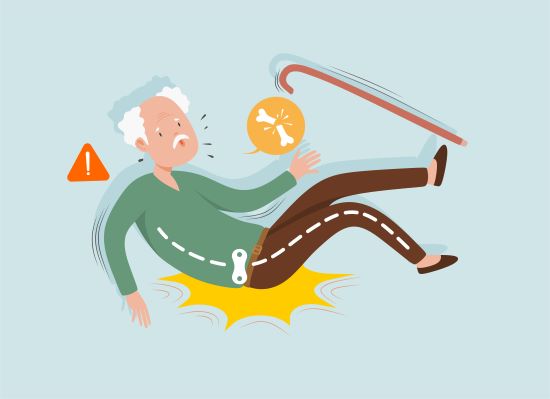
A female resident is required to have the assistance of a staff member when walking; however, she is in her room and needs to use the bathroom. She thinks it’s silly to bother the staff since the bathroom is nearby and everyone is so busy, so she goes alone. A staff member happens to see the resident ambulating unaccompanied and goes to assist her. Before the staff member makes it to the resident, she falls and is crying in pain. These circumstances have the potential to turn into a medical malpractice claim, so communication at this point is critical.
The staff member who contacts the resident’s family says, “Hi, I’m calling to let you know your mother fell. She was supposed to use her call light to alert us, but she didn’t. I happened to walk by her room and tried to quickly assist her, but she fell on the floor before I could get to her. She was in a lot of pain, so we sent her to the hospital. I think she may have broken her hip.”
This notification is troubling for several reasons. First, the family hears that staff were not doing the job they were supposed to do in helping the resident ambulate. Additionally, the staff member is blaming the resident for the injury by pointing out that she didn’t use the call light to alert staff. Although this is true, it doesn’t help matters when communicating with an upset family member. Further, the staff member speculates about the resident’s injuries, which may lead to unnecessary concern for the family and a lack of trust in the staff’s knowledge if the injuries prove different.
A more professional and less problematic notification might go as follows: “Good afternoon, I’m calling to let you know your mother fell. As a precaution, we’ve sent her to [X] hospital. If you’d like to see her, please go there. When we have more details about the fall, someone on our leadership team (e.g., our ADON, DON, executive director, or director of resident/clinical services) will call you.”
Even with this explanation, the family will very likely ask about how the resident fell. The staff member providing the notification should simply reply, “Your mother fell while walking to the bathroom. Our leadership team will conduct an event review and will provide you with more details.”
Although other staff members at the center won’t be involved in the initial notification to the family, they also need training in proper disclosure techniques. The resident’s family may come to the facility in the days following the fall and ask staff members various questions, including whether they were working when the fall occurred and what details they know about the fall. If the family asks multiple staff members, they will most likely get multiple versions of the event. This creates doubt about what happened, raises issues about transparency, and leaves the center’s leadership at a loss to control the situation.
To prevent this type of scenario, all staff members should be trained to respond in the same manner. They should simply reply, “I’m sorry, I don’t have that information. You’ll need to follow up with the center’s leadership.” This approach protects staff members from a plaintiff attorney later deposing them and it helps the center’s leadership manage communication with the family about the unanticipated outcome.
Other strategies that can help support appropriate disclosure of unanticipated outcomes and mitigate disclosure risks include:
- Developing a written disclosure policy that supports a culture of safety and transparency, and training all staff members (including organizational leaders) on the policy and processes associated with disclosure.
- Establishing guidance for situations that require disclosure versus those that may not (e.g., near-miss events).
- Conducting role-playing or simulation exercises to offer leaders and staff members the opportunity to practice and refine their approaches for communicating with residents’ families.
- Teaching techniques and methods that support empathetic acknowledgment and communication with residents’ families.
- Providing residents’ families with a contact person they can reach out to for additional information and to clarify any questions.
For additional insights on communication risks in senior care settings and ways to mitigate these issues, click here.
TOOLS & RESOURCES
- Articles
- Booklets
- Checklists
- Claims Data by Specialty
- Claims Data by Topic
- Guidelines
- Product Catalog
- Reference Manual
- Resource Lists
- Risk Management Review
- Risk Q&A
- Risk Tips
- Sample Dental Informed
Consent Forms - Sample OMS Informed
Consent Forms - Senior Care Resources from
Pendulum
